SPV (Isuzuchina's brother company) exported 1 unit of LPG Dispenser Truck to Nigeria in Sep, 2024. Here we talk about how we produce the LPG Tank Truck.
The production process of an LPG (Liquefied Petroleum Gas) tank truck involves several critical stages to ensure safety, durability, and compliance with regulatory standards. Here’s a detailed overview of the process:
1. Design and Engineering:
- Custom Design: The process begins with the design of the LPG tank truck, tailored to meet specific customer requirements, capacity needs, and safety regulations. Engineers use advanced CAD software to design the tank and truck chassis, ensuring structural integrity and weight distribution.
2. Material Selection:
- High-Grade Steel: The tank is made from high-strength carbon steel or stainless steel, selected for its durability, corrosion resistance, and ability to withstand high pressure.
- Insulation Materials: In some cases, thermal insulation may be applied to keep the LPG at the appropriate temperature during transportation.
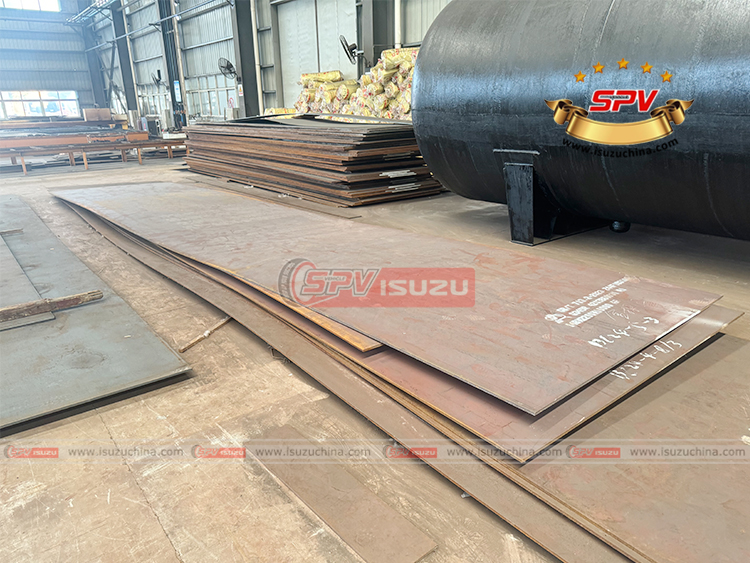
- Steel Plate For LPG Tank
3. Cutting and Shaping:
- Steel Cutting: The steel plates are cut into precise shapes using CNC (Computer Numerical Control) plasma or laser cutting machines, ensuring accuracy in dimensions.
- Forming and Rolling: The steel plates are then rolled into cylindrical shapes to form the tank’s body, ensuring it can hold the necessary volume of LPG.
-
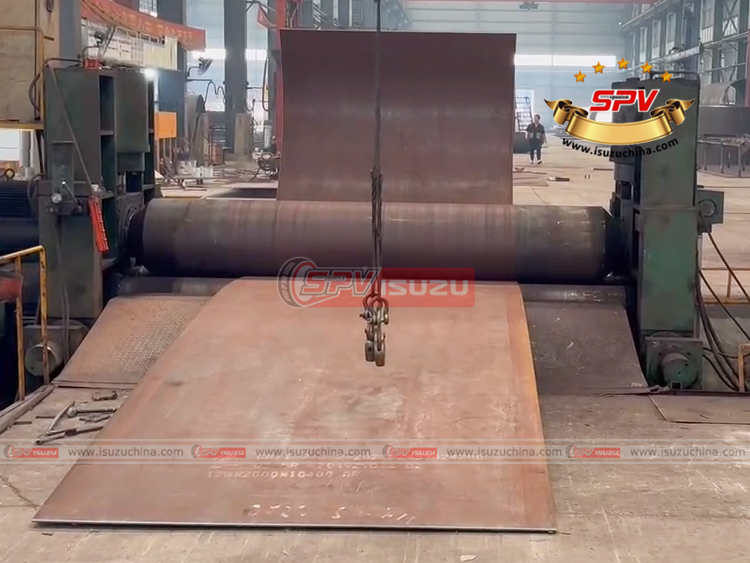 Steel Plate Automatic Rolling
4. Welding:
- Tank Welding: The rolled steel sections are welded together using advanced welding techniques (such as submerged arc welding) to form a seamless, pressure-resistant tank. Special attention is given to weld quality to ensure the tank can withstand high pressure.
- Testing of Welds: Non-destructive testing methods, such as X-ray or ultrasonic inspection, are applied to check for any flaws or cracks in the welds.
-
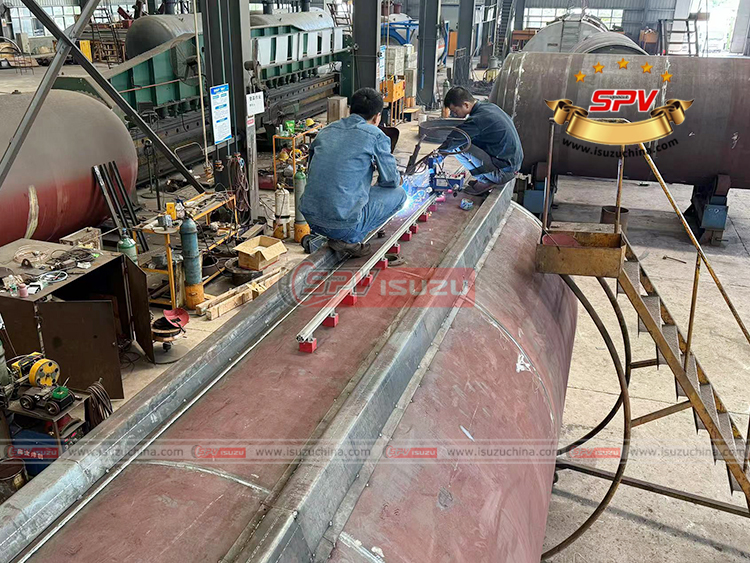
- Welding Test
5. Tank Assembly:
- Fittings Installation: Once the tank body is formed, various components such as valves, pressure relief devices, and manholes are installed to allow safe loading, unloading, and maintenance of the tank.
- Chassis Mounting: The tank is mounted onto a truck chassis, usually sourced from reputable manufacturers like ISUZU, to create the LPG tank truck. Mounting systems must be strong and flexible to handle the weight and movements during transportation.
-
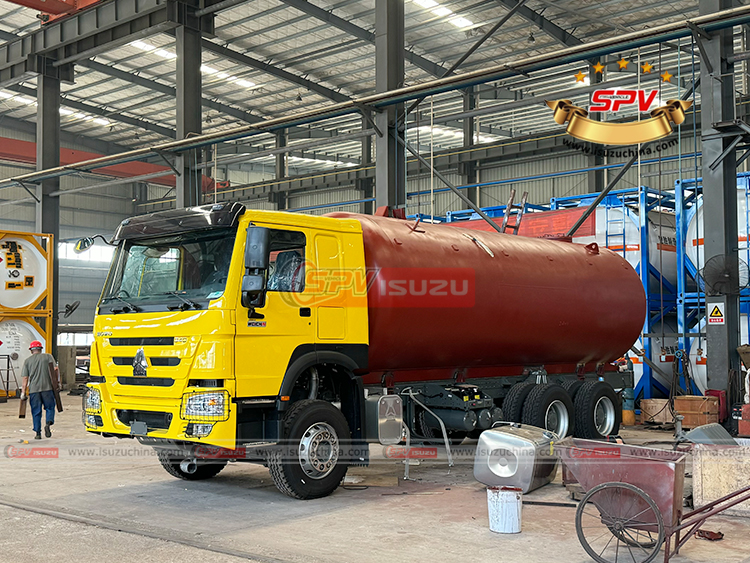 LPG Tank Installed Onto Chassis
6. Surface Treatment:
- Shot Blasting: The exterior surface of the tank is shot blasted to remove any impurities and improve paint adhesion.
- Coating and Painting: Anti-corrosive coatings and high-durability paints are applied to protect the tank from environmental damage and wear. The exterior is typically finished with company branding or safety decals.
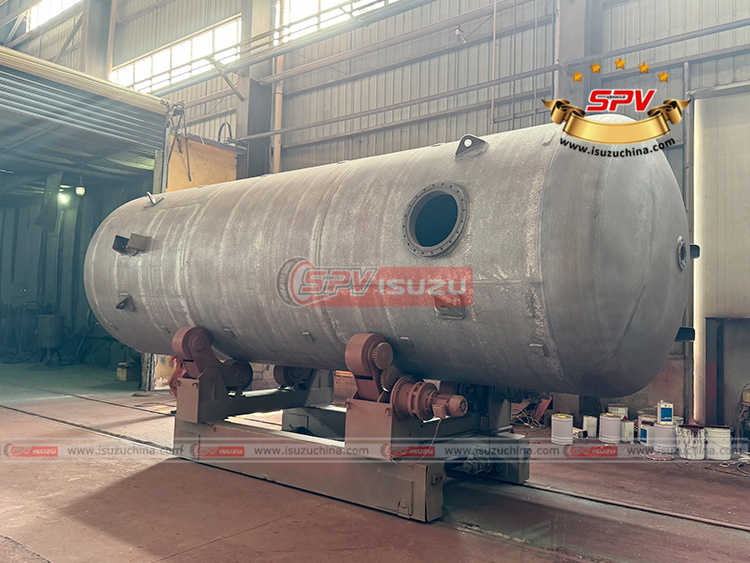
- After Shot Sandblasting
-
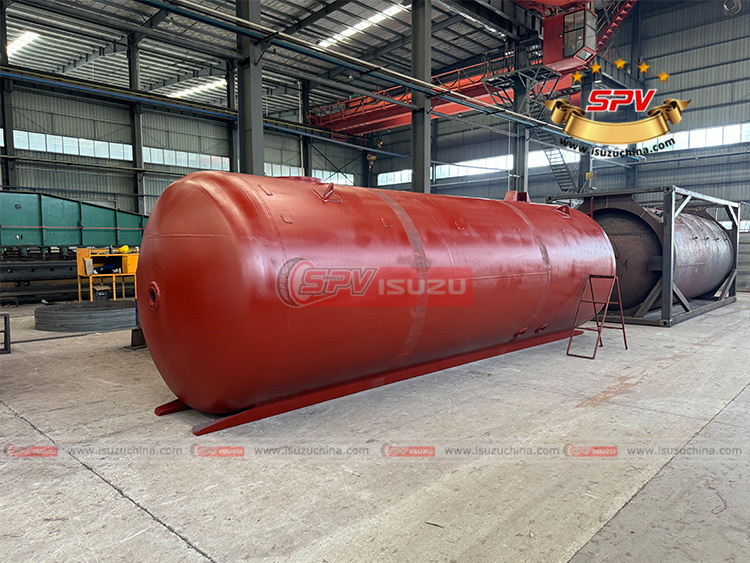 After Anti-corrosive
 -
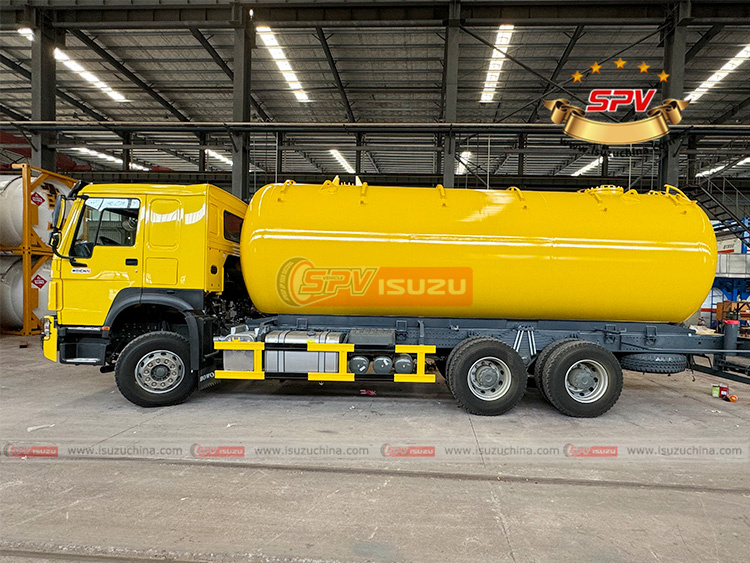 After Painting
7. Testing and Quality Control:
- Pressure Testing: The tank undergoes rigorous pressure testing, where it is filled with water or gas and subjected to pressure higher than its operating level to check for leaks or weaknesses.
- Vacuum Test: Vacuum testing may also be conducted to ensure that the tank’s insulation and seals are airtight.
- Safety Inspections: Additional safety tests, such as impact resistance and fire safety checks, are conducted to ensure the tank meets safety regulations.
8. Installation of Safety Equipment:
- Gauges and Sensors: Pressure gauges, temperature sensors, and other monitoring systems are installed to ensure the safe operation of the LPG tank during transportation.
- Fire Safety Systems: Fire extinguishers, emergency shut-off valves, and explosion-proof electrical components are fitted to enhance safety.
9. Final Assembly and Inspection:
- Chassis Integration: The truck’s electrical and hydraulic systems are connected, ensuring the LPG tank’s pumps, valves, and other mechanical systems work seamlessly with the truck’s controls.
- Final Quality Check: The fully assembled LPG tank truck undergoes a final inspection to ensure all components, safety features, and functionalities meet both customer specifications and regulatory standards.
 Steel Plate Automatic Rolling
 LPG Tank Installed Onto Chassis
 After Anti-corrosive
  After Painting


